
A dental implant consists of two key phases: the surgical placement of the biocompatible titanium post within the jawbone, and the placement of the final custom restoration that sits above the gumline. While the implant post acts as a sturdy artificial tooth root, the restoration is what restores your visible smile, bite force, and facial aesthetics. At Craft of Dentistry in Austin, TX, our team crafts custom implant crowns, bridges, and dentures that blend seamlessly with your natural teeth.

Completing Your Dental Implant Treatment
Once your dental implant post has fully integrated with your jawbone through osseointegration, it provides an immovable foundation for a permanent restoration. The restoration phase is non-surgical, comfortable, and tailored to match your natural tooth dynamics:
- Custom impression and digital scanning: Utilizing our intraoral 3D scanner, we capture high-precision digital impressions to map out your restoration without messy materials.
- Abutment placement: A small connector piece (abutment) is attached to the implant post to securely hold your custom crown, bridge, or denture.
- Precision shading and contouring: Every restoration is custom-milled to match the exact shade, translucency, and contouring of your surrounding natural teeth.
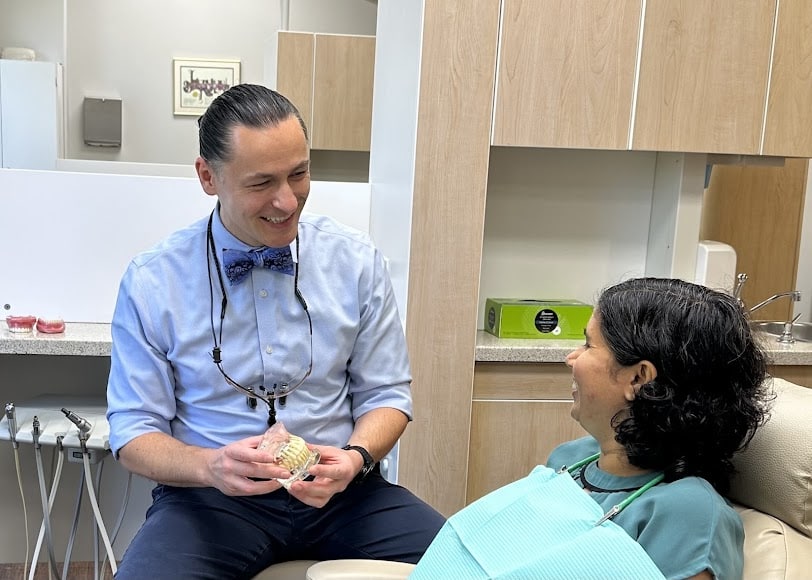
Custom Crowns, Bridges, & Dentures
Depending on the number of teeth being replaced, our doctors design a tailored implant-supported restoration to suit your specific clinical needs:
- Single-tooth implant crowns: Replaces an individual missing tooth without altering or relying on neighboring natural teeth.
- Implant-supported bridges: Replaces multiple consecutive missing teeth by anchoring a custom ceramic bridge to two or more dental implants.
- Implant-supported full dentures: Anchors a full-arch prosthetic securely onto strategic implant posts, eliminating slippage and eliminating the need for messy adhesives.

Restoring Function & Appearance
Dental implant restorations offer unmatched functional and aesthetic advantages compared to traditional tooth replacement options:
- Uncompromising stability: Anchoring directly to the jawbone allows you to chew hard or crunchy foods with full force and confidence.
- Jawbone preservation: Transmits natural biting forces into the jawbone, stimulating bone tissue and preventing the bone loss that naturally follows tooth extraction.
- Seamless visual integration: Made from durable, biocompatible porcelain or zirconia, your new restoration reflects light exactly like natural enamel.
Long-Term Care For Implant Restorations
Although dental implant restorations are immune to decay, maintaining healthy surrounding gum tissue and bone density is critical to ensure their lifelong success:
- Brush and floss daily: Practice meticulous daily home care, cleaning thoroughly around the implant crown margin and gumline.
- Use specialized cleaning tools: Utilize water flossers, interdental brushes, or threaders to keep tissue surrounding bridges and implant-supported dentures clean and plaque-free.
- Wear a custom nightguard: If you grind or clench your teeth during sleep, a protective nightguard shields your porcelain restoration from excessive force.
- Schedule regular check-ups: Visit our office for routine hygiene cleanings and check-ups so our team can evaluate your implant stability and surrounding tissue health.
Frequently Asked Questions
What Is A Dental Implant Restoration?
A dental implant restoration is the visible replacement tooth or teeth attached to dental implants. Depending on your needs, the restoration may be a single crown, an implant-supported bridge, or an implant-supported denture designed to restore appearance and chewing function.
When Can My Final Implant Restoration Be Placed?
The timeline varies based on implant stability, bone quality, healing, and the type of restoration being created. In many cases, the implant is allowed to integrate with the surrounding bone before the final restoration is attached. Your dentist will determine when the implant is ready for the restorative phase.
What Is An Implant Abutment?
An abutment is a connector that attaches to the dental implant and supports the restoration above the gumline. Abutments can vary in design depending on the location of the implant, gum tissue, bite, and type of final restoration.
What Is The Difference Between An Implant Crown & A Dental Crown?
A traditional dental crown covers and protects a prepared natural tooth. An implant crown replaces a missing tooth and is supported by a dental implant rather than natural tooth structure.
Can Dental Implants Replace Multiple Missing Teeth?
Yes. Multiple missing teeth may be restored with an implant-supported bridge or another implant-supported prosthesis. The number and placement of implants needed depends on your anatomy, bone support, bite, and the number of teeth being replaced.
What Is An Implant-Supported Denture?
An implant-supported denture uses dental implants to provide greater retention and stability than a conventional removable denture. Depending on its design, the restoration may be removable by the patient or fixed in place and removed only by a dental professional.
Will My Implant Restoration Look Like A Natural Tooth?
Implant restorations are customized to complement surrounding teeth and facial features. Factors such as shade, shape, size, position, and the appearance of the gum tissue are considered when designing a natural-looking result.
Can I Eat Normally With A Dental Implant Restoration?
Once treatment and healing are complete, implant-supported restorations can provide strong, stable chewing function. However, it is still important to avoid habits that could damage natural teeth or restorations, such as chewing ice or using your teeth to open objects.
How Long Do Dental Implant Restorations Last?
The lifespan varies based on the type of restoration, bite forces, oral hygiene, grinding habits, materials, and other individual factors. Implant crowns, bridges, and dentures can provide many years of function but may eventually require repair or replacement.
Can A Dental Implant Crown Get A Cavity?
The implant crown itself cannot develop a cavity because it is made from restorative material rather than natural enamel. However, plaque can still accumulate around the restoration and contribute to inflammation or disease in the tissues supporting the implant.
How Do I Clean Around A Dental Implant Restoration?
Brush thoroughly around the implant restoration and clean between teeth or beneath implant-supported bridges as directed. Floss, interdental brushes, water flossers, or specialized cleaning aids may be recommended depending on the design of your restoration.
Can A Dental Implant Restoration Be Repaired Or Replaced?
Yes. If an implant crown, bridge, or denture becomes worn, chipped, loose, or damaged, it may be possible to repair or replace the restoration without replacing the implant itself. The implant and surrounding tissues should first be evaluated to determine the cause of the problem.
Can My Existing Denture Be Attached To Dental Implants?
Some existing dentures can be modified to work with implant attachments, while others need to be replaced with a restoration specifically designed for implant support. Your dentist can evaluate the condition, fit, design, and available space within your current denture to determine whether modification is appropriate.
How Much Does A Dental Implant Restoration Cost In Austin, TX?
Cost depends on whether you need an implant crown, bridge, or denture, as well as the materials used and complexity of treatment. Craft of Dentistry can evaluate your implant and provide a personalized estimate for your final restoration in Austin, TX.
Where Can I Get A Dental Implant Restored In Austin, TX?
Craft of Dentistry provides custom implant restorations designed to restore the appearance and function of missing teeth. Whether you need a single implant crown or a larger implant-supported restoration, our team can develop a personalized restorative plan in Austin, TX.
Call our office in Austin, TX
today
To schedule your consultation and complete your smile with custom dental implant restorations.