
Over time, daily wear, accidental trauma, or decay can compromise the strength, appearance, and function of your teeth. Restorative dentistry focuses on repairing damaged tooth structures, replacing missing teeth, and restoring complete balance to your bite. At Craft of Dentistry in Austin, TX, our team combines advanced clinical techniques with durable, natural-looking materials to rebuild your smile with total precision, comfort, and care.

Understanding Your Restorative Treatment Options
Modern restorative care encompasses a wide range of customized solutions designed to meet your specific structural needs. Whether you require a minor repair or a complete smile rehabilitation, our doctors tailor every procedure to preserve as much natural tooth structure as possible:
- Tooth-colored composite fillings: Seamlessly repair minor decay or fractures using shade-matched composite resin for a natural finish.
- Porcelain crowns and bridges: Restores severely decayed or broken teeth and replaces missing teeth by anchoring custom ceramic crowns to neighboring supporting teeth.
- Dental implants: The gold standard for replacing missing teeth, integrating directly with your jawbone to provide unmatched stability and support.
- Inlays and onlays: Custom ceramic restorations designed to repair moderate tooth damage when a full crown is unnecessary, but a simple filling is insufficient.
- Full and partial dentures: Removable or implant-supported appliances that replace multiple missing teeth, restoring complete chewing ability and facial harmony.

Personalized Care For Damaged & Missing Teeth
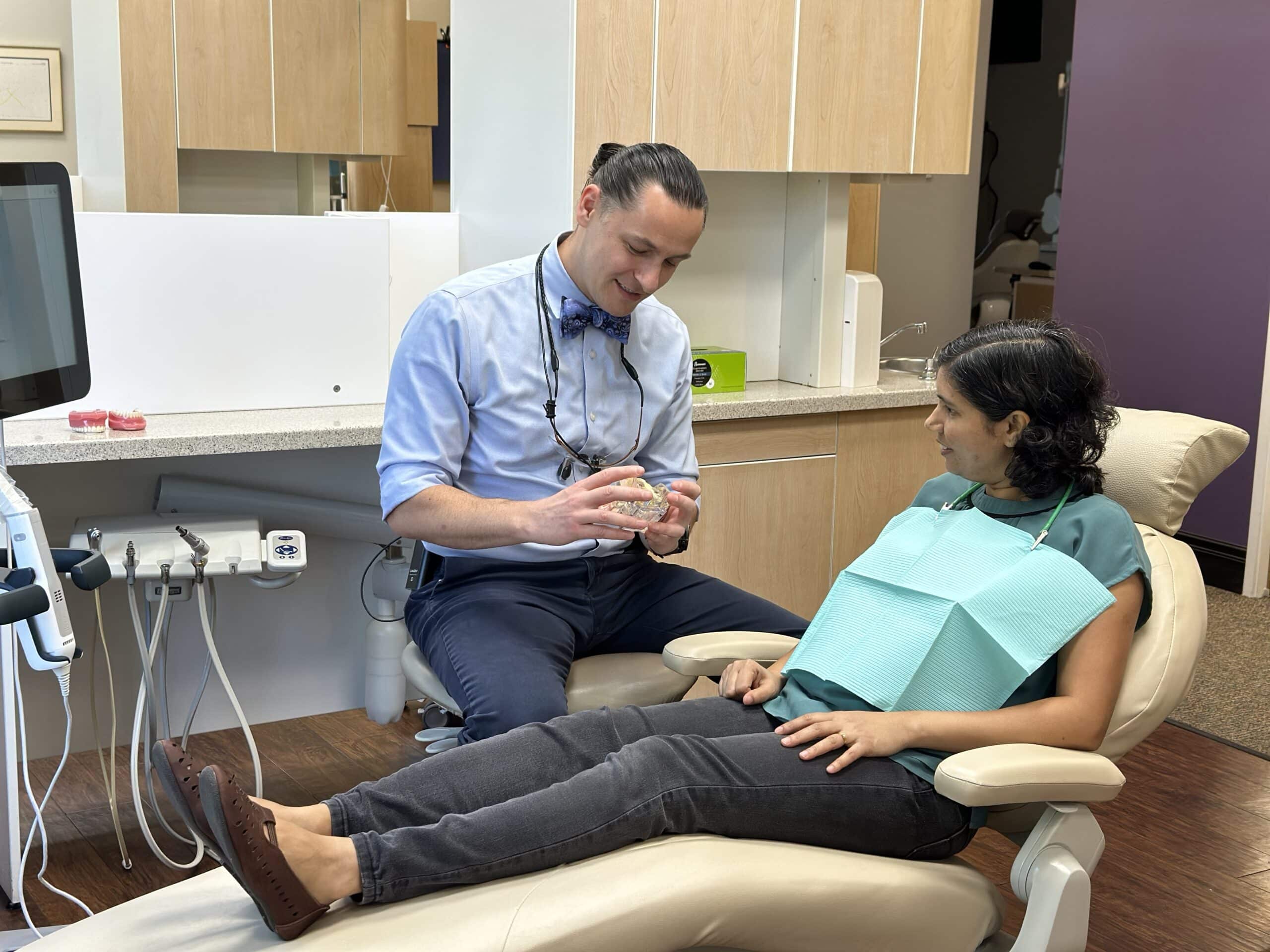
No two smiles are identical, and successful restorative treatment relies on a personalized approach. During your comprehensive clinical evaluation, our doctors assess your teeth, gum health, and jaw alignment using high-resolution digital x-rays and intraoral 3D scanning.
By identifying underlying structural vulnerabilities, we design a transparent, step-by-step treatment plan that addresses your immediate concerns while protecting your long-term oral health.
Advanced Materials For Natural-Looking Results
Gone are the days when dental repairs relied on dark, highly visible metal amalgams. Modern restorative dentistry utilizes biocompatible porcelain, zirconia, and tooth-colored composite resins that mirror the natural translucency, shade, and strength of real tooth enamel. These advanced materials bond securely to your remaining tooth structure, delivering exceptional durability while ensuring your restored smile looks completely seamless and natural.
Restoring Comfort, Strength, & Confidence
Damaged or missing teeth do more than affect your self-esteem—they can cause bite misalignment, jaw joint strain, and difficulty chewing or speaking clearly. By restoring proper tooth contours and replacing missing teeth, restorative dentistry alleviates structural stress across your jaws.
Restoring full bite function allows you to enjoy your favorite foods without tooth discomfort, speak with total clarity, and smile with renewed confidence in every setting.
Long-Term Care For Dental Restorations
Protecting your investment in your smile requires simple, consistent home care and professional oversight:
- Maintain thorough daily hygiene: Brush twice daily with a non-abrasive toothbrush and floss daily around crowns, bridges, and natural teeth to keep the gumline healthy.
- Wear a protective custom nightguard: If you clench or grind your teeth during sleep, a custom nightguard prevents excessive vertical wear and protects ceramic restorations from fracturing.
- Avoid biting hard objects: Refrain from chewing on ice, hard candies, or using your teeth as tools to prevent chipping or loosening your restorations.
- Schedule regular hygiene check-ups: Attend routine cleanings and exams so our team can monitor the integrity of your restorations over time.

Preventing Future Dental Problems After Treatment
Restorative care establishes a clean slate for your oral health, but proactive prevention ensures those benefits last a lifetime. Combining daily flossing and brushing with routine fluoride applications and professional hygiene visits eliminates plaque accumulation around restoration margins. Early intervention prevents recurrent decay beneath restorations, protecting your investment and preserving your natural teeth for decades to come.
Frequently Asked Questions
What Is Restorative Dentistry?
Restorative dentistry focuses on repairing damaged or decayed teeth and replacing teeth that have been lost. Treatment can range from a small tooth-colored filling to crowns, bridges, dental implants, dentures, and more comprehensive rehabilitation. The goal is to restore comfortable function while preserving healthy natural tooth structure whenever possible.
How Do I Know If I Need Restorative Dental Treatment?
Common signs include tooth discomfort or sensitivity, visible cracks or chips, cavities, difficulty chewing, loose or damaged restorations, and missing teeth. Some dental problems cause few noticeable symptoms, which is why routine examinations and appropriate x-rays are important for early detection.
What Is The Difference Between A Filling & A Dental Crown?
A filling repairs a relatively small area of decay or damage while preserving most of the natural tooth. A crown covers the visible portion of a more extensively weakened or damaged tooth to restore its shape, strength, and function. Your dentist will recommend the most conservative treatment that can predictably restore the tooth.
What Is The Difference Between An Inlay, Onlay, & Crown?
Inlays and onlays are custom restorations used when a tooth needs more reinforcement than a filling can provide but may not require complete coverage with a crown. An inlay fits within the cusps of the tooth, while an onlay can cover one or more cusps. A crown covers substantially more of the visible tooth structure.
Can A Cracked Or Broken Tooth Be Saved?
Many cracked or broken teeth can be restored, particularly when treatment is provided before the damage extends too deeply. Depending on the severity and location of the damage, treatment may involve bonding, a filling, an onlay, a crown, or root canal treatment. Teeth with extensive fractures may sometimes require extraction.
Can A Severely Decayed Tooth Be Repaired?
It depends on how much healthy tooth structure remains and whether the tooth's root and surrounding tissues can support a restoration. Some extensively decayed teeth can be rebuilt with a crown, sometimes following root canal treatment. If a tooth cannot be predictably restored, extraction and tooth replacement options may be discussed.
Do I Need A Root Canal Before Getting A Crown?
Not necessarily. Many teeth can receive crowns without root canal treatment. A root canal may be necessary if the pulp inside the tooth has become significantly inflamed, infected, or damaged. Your dentist will evaluate the tooth and determine whether additional treatment is needed before placing the crown.
What Are My Options For Replacing A Missing Tooth?
Depending on your oral health, number of missing teeth, bone support, preferences, and budget, options may include a dental implant, traditional bridge, partial denture, or full denture. Each option has different advantages and considerations, so a comprehensive evaluation can help determine which solution is appropriate for you.
Is It Important To Replace A Missing Tooth?
Replacing a missing tooth can restore chewing function and appearance while helping maintain appropriate tooth positioning and bite function. When a tooth is lost, neighboring teeth may gradually shift into the open space, and bone in the area can change over time. However, treatment recommendations depend on the location of the missing tooth and your individual oral health.
What Is The Difference Between A Dental Implant & A Bridge?
A dental implant replaces a missing tooth using an implant placed in the jawbone to support a restoration. A traditional bridge replaces a missing tooth by using neighboring teeth for support. Implants do not require preparation of adjacent healthy teeth, while bridges may be appropriate for patients who prefer a non-implant option or are not candidates for implant treatment.
Are Dental Implants Better Than Dentures?
Neither option is universally better. Dental implants can provide strong, stable support and help preserve bone in the areas where they are placed, while dentures offer a removable solution for replacing several or all missing teeth. Implant-supported dentures can also combine features of both approaches. The best solution depends on your oral health, anatomy, preferences, and budget.
How Long Do Dental Crowns & Bridges Last?
Crowns and bridges can last for many years, but there is no guaranteed lifespan. Their longevity depends on oral hygiene, bite forces, the condition of the supporting teeth, grinding or clenching, diet, and other factors. Regular dental visits allow us to monitor restorations and identify signs of wear or damage.
How Long Do Tooth-Colored Fillings Last?
Composite fillings can provide many years of service, but their lifespan varies based on the size and location of the filling, chewing forces, oral hygiene, and habits such as grinding or clenching. Larger fillings or restorations on heavily used teeth may eventually require repair or replacement.
Will My Dental Restorations Look Like Natural Teeth?
Modern restorative materials can be carefully selected to complement the color, shape, and translucency of surrounding teeth. Tooth-colored composite, porcelain, and zirconia allow many fillings, crowns, bridges, and implant restorations to blend naturally with your smile.
Will Restorative Dental Treatment Hurt?
Local anesthesia can be used during procedures when necessary to keep the treatment area comfortable. The experience varies depending on the procedure and individual patient. Some temporary sensitivity or tenderness can occur afterward, and we will explain what to expect and how to care for the treated area.
How Long Does Restorative Dental Treatment Take?
Treatment time depends on the procedure and complexity of your needs. A filling may require only one appointment, while crowns, bridges, implants, dentures, or comprehensive restorative plans can involve multiple visits over a longer period. We will explain the expected timeline before beginning treatment.
Can Several Damaged Or Missing Teeth Be Restored At The Same Time?
Yes. When multiple teeth require treatment, we can develop a comprehensive restorative plan that considers your entire bite rather than addressing each tooth independently. Treatment may be completed in phases depending on your needs, priorities, budget, and the procedures involved.
What Is Full-Mouth Rehabilitation?
Full-mouth rehabilitation is a personalized treatment approach for patients with widespread tooth damage, significant wear, multiple missing teeth, bite problems, or a combination of concerns. It may incorporate crowns, bridges, implants, dentures, and other treatments to rebuild function, health, and appearance throughout the mouth.
Can Old Or Damaged Dental Restorations Be Replaced?
Yes. Fillings, crowns, bridges, and other restorations can wear, chip, loosen, or develop problems around their margins over time. If an existing restoration is no longer functioning properly, we can evaluate the tooth and determine whether the restoration should be repaired or replaced.
Can Decay Develop Under A Crown Or Filling?
Yes. Although the restorative material itself cannot develop a cavity, the natural tooth around or beneath the edges of a restoration can still decay. Daily brushing and flossing and regular dental visits are important for protecting restored teeth.
How Do I Take Care Of Crowns, Bridges, Fillings, & Other Restorations?
Brush twice daily, clean between your teeth every day, and attend routine dental examinations and professional cleanings. Bridges may require specialized floss or other tools to clean underneath the replacement tooth. If you grind or clench, a nightguard may also be recommended to protect your natural teeth and restorations.
Does Dental Insurance Cover Restorative Dentistry?
Many dental insurance plans provide some coverage for medically necessary restorative procedures, but benefits, deductibles, waiting periods, annual maximums, and coverage percentages vary. More extensive treatments may have different coverage requirements. Our team can help you review your benefits and estimated costs.
How Much Does Restorative Dentistry Cost In Austin, TX?
Cost depends on the type of restoration, number of teeth requiring treatment, materials used, and complexity of your case. A small filling will have a very different cost from a dental implant or full-mouth rehabilitation. After evaluating your needs, Craft of Dentistry can provide a personalized treatment plan and cost estimate for your restorative care in Austin, TX.
Call our office in Austin, TX
today
To schedule your restorative consultation and rebuild your healthy, functional smile with our caring team.